Space Telescopes

Space Telescope Overview
Observatories in space offer several advantages over ground based facilities.
Space based telescopes are above the distorting affects of the atmosphere.
This distortion, sometimes called scintillation or twinkling, is a significant problem for ground based observatories.
Another problem encountered by ground-based observatories is limited observing time due to Earths rotation.
Space telescopes, free of the Earth's surface, can often spend much longer periods of time observing a target.
(Kepler, for instance, observed the same field of view for over three years.)
Space telescopes are often classed as either a survey mission or as an observatory.
Survey missions map the entire sky, while observatories observe certain sections of the cosmos.
Orbital space telescopes are vital for studying portions of the electromagnetic spectrum that do not penetrate Earth's atmosphere,
such as gamma-rays, x-rays, and much of the infrared spectrum.
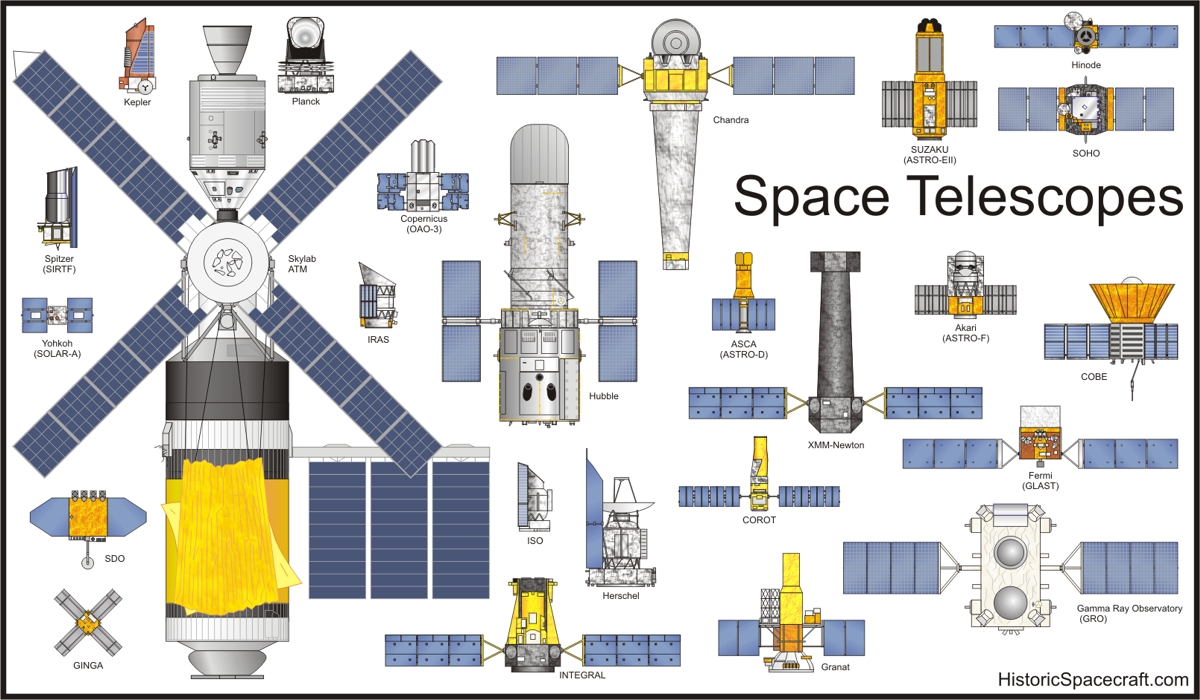
The graphic at left includes images of 25 historic space telescopes. (View Larger Version)


James Webb Space Telescope
In December 2021, the James Webb Space Telescope (JWST) was successfully launched on an Ariane 5 ECA rocket.
The powerful infrared telescope will be deployed at the L2 Lagrange point.
Among other interesting uses, the telescope will be used to observe exoplanets,
generating data that will be used to characterize atmospheric composition and planetary conditions.
JWST uses a deployable sunshade to keep the instruments cool,
unlike some earlier infrared observatories that used a supply of liquid helium to maintain low enough temperatures.
For more information, visit the James Webb Space Telescope website.
Hubble Space Telescope (HST)

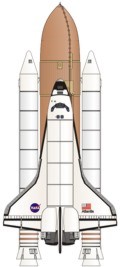
Hubble Space Telescope
The Hubble Space Telescope was launched on the Space Shuttle on 24 April 1990.
Deployed on 25 April 1990, Hubble is a 2.4 meter reflecting telescope that operates in low Earth orbit.
Early Problems
Several significant problems were discovered soon after orbital operations started.
Perhaps the most significant problem was an improperly ground primary mirror, resulting in blurry images.
Additionally, flexing of the original solar panels, as the spacecraft passed in and out of sunlight during its orbit, created stability problems.
Both of these problems would be corrected during subsequent servicing missions.
Hubble Space Telescope Scientific Instruments
Wide Field Planetary Camera 1 (WFPC1) Original instrument.
Faint Object Spectrograph (FOS) Original instrument.
Goddard High Resolution Spectrograph (GHRS) Original instrument.
Faint Object Camera (FOC) Original instrument.
High Speed Photometer (HSP) Original instrument.
Wide Field Planetary Camera 2 (WFPC2) Installed on Servicing Mission 1.
Space Telescope Imaging Spectrograph (STIS) Installed on Servicing Mission 2.
Near Infrared Camera and Multi-Object Spectrometer (NICMOS) Installed on Servicing Mission 2.
Advanced Camera for Surveys (ACS) Installed on Servicing Mission 3B.
Wide Field Camera 3 (WFC3) Installed on Servicing Mission 4.
Cosmic Origins Spectrograph (COS) Installed on Servicing Mission 4.
Hubble Space Telescope Servicing Missions
The Hubble Space Telescope was designed to be serviced on orbit. Scientific instruments, as well as gyroscopes, computers, solar arrays, and other components could be replaced or repaired by visiting Space Shuttle crews.
HST Servicing Mission 1 (SM1)
HST servicing mission 1 was flown by the space shuttle Endeavour as STS-61. The mission launched on 2 December 1993.
The seven member crew conducted a record five spacewalks, totaling over 35 hours.
To compensate for the flawed primary mirror, astronauts installed a device known as COSTAR (the Corrective Optics Space Telescope Axial Replacement). Nearly the size of a telephone booth, COSTAR included a number of corrective mirrors.
Wide Field Planetary Camera 2 (WFPC2) was installed in place of the original WFPC1. WFPC2 was more capable then the original, and incorporated corrective optics to compensate for Hubble's flawed primary mirror.
New solar arrays were installed on the telescope. The original solar arrays were found to cause stability problems for the telescope. The arrays would flex as the telescope passed in and out of Earths shadow during its orbit. The new arrays were engineered to alleviate this problem.
HST Servicing Mission 2 (SM2)
Hubble Servicing Mission 2 was flown with the space shuttle Discovery as STS-82. The mission, launched on 11 February 1997, included a seven person crew.
Upgrades included the installation of the Space Telescope Imaging Spectrograph (STIS), and the Near Infrared Camera and Multi-Object Spectrometer (NICMOS). A number of power, guidance, and data upgrades were also made on this mission.
HST Servicing Mission 3A (SM3A)
Hubble Servicing Mission 3A was flown with the space shuttle Discovery as STS-103. The mission, launched on 19 December 1999, included a seven person crew.
In 1999, mechanical problems aboard Hubble, including the failure of several gyroscopes, resulted in science activities being curtailed. NASA decided to split the planned third servicing mission into two flights, 3A and 3B. This change allowed a repair mission to be flown much sooner than would otherwise have been the case. Servicing mission 3A was able to make critical repairs, allowing the telescope to return to science operations.
Repairs included the installation of six new gyroscopes, a new computer, a solid state data recorder, an enhanced guidance sensor, and other components.
HST Servicing Mission 3B (SM3B)
Hubble Servicing Mission 3B was flown with the space shuttle Columbia as STS-109. The mission, launched on 1 March 2002, included a seven person crew.
Upgrades included the installation of the Advanced Camera for Surveys (ACS).
Hubble's solar arrays were replaced with more advanced units.
Installation of a Power Control Unit and a cryocooler were also carried out on this mission. The cryocooler was added to the existing Near Infrared Camera and Multi-Object Spectrometer (NICMOS) instrument. NICMOS had been dormant for several years after its original cooling system became inoperative.
HST Servicing Mission 4 (SM4)
Hubble Servicing Mission 4 was flown with the space shuttle Atlantis as STS-125. The mission, launched on 11 May 2009, included a seven person crew.
This mission featured the installation of two new science instruments, the Wide Field Camera 3 (WFC3), and the Cosmic Origins Spectrograph (COS).
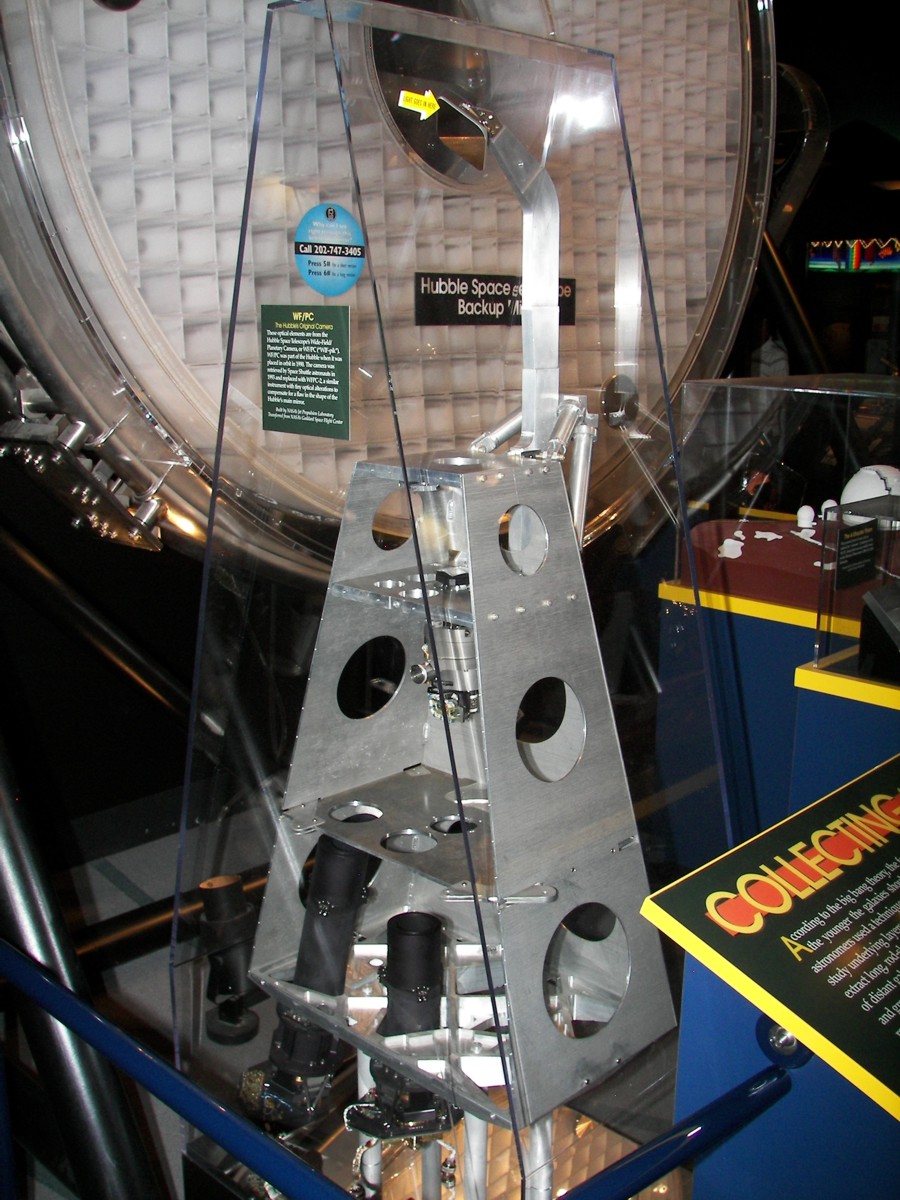
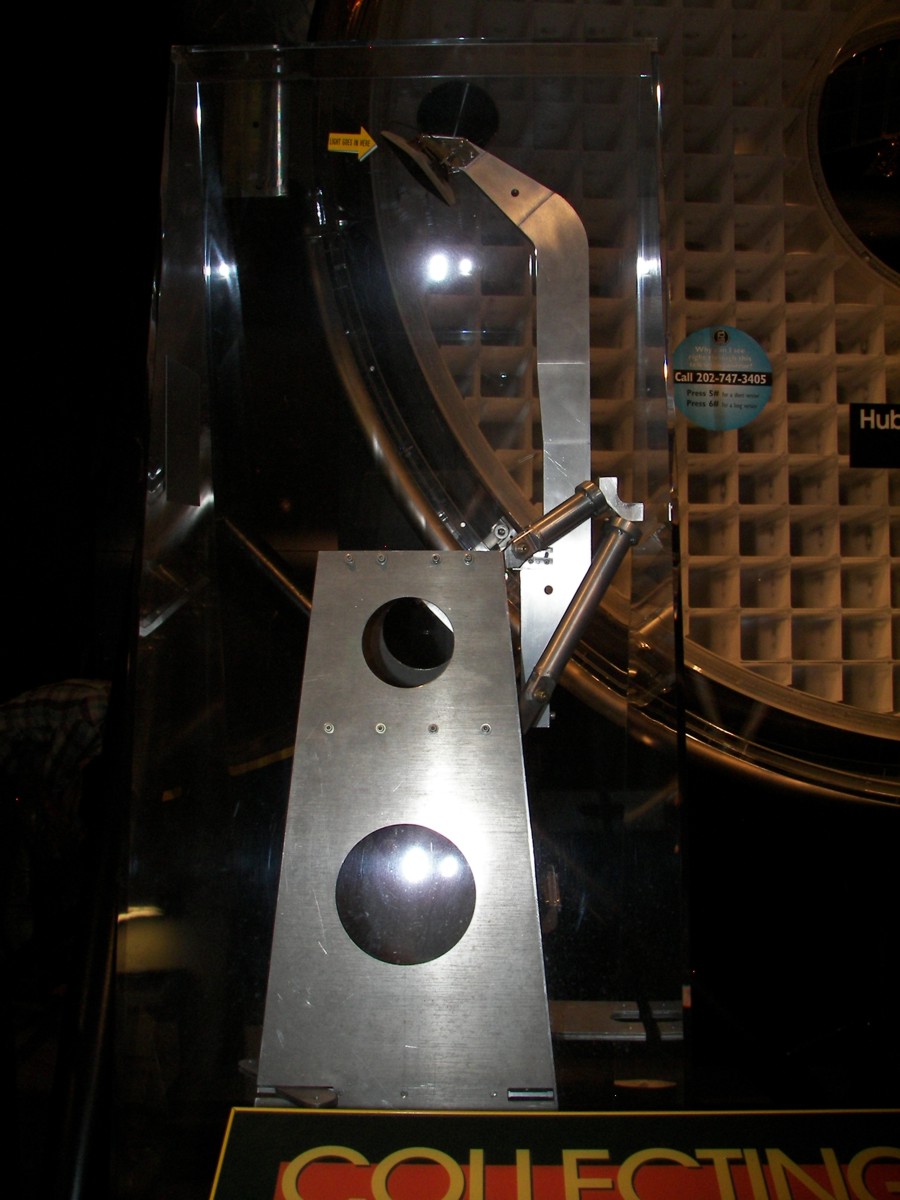
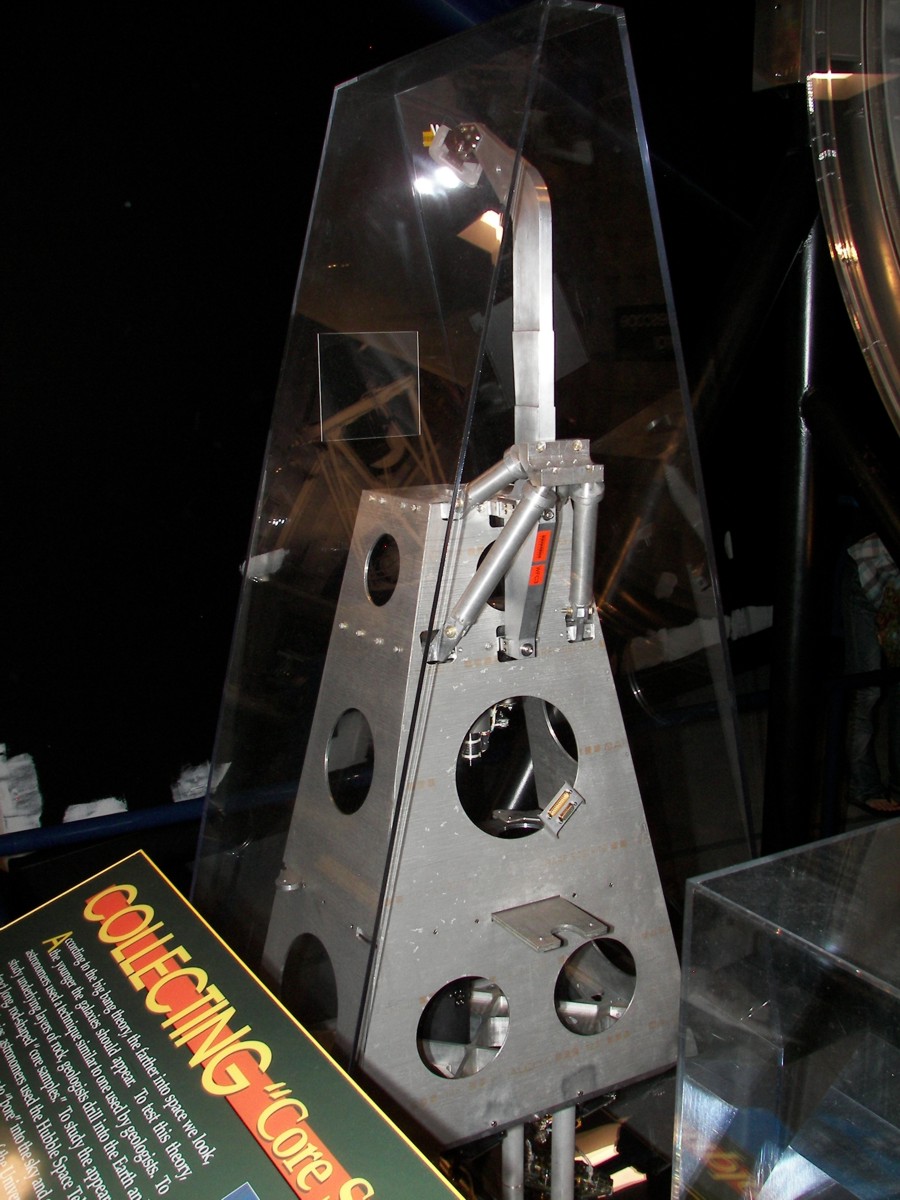
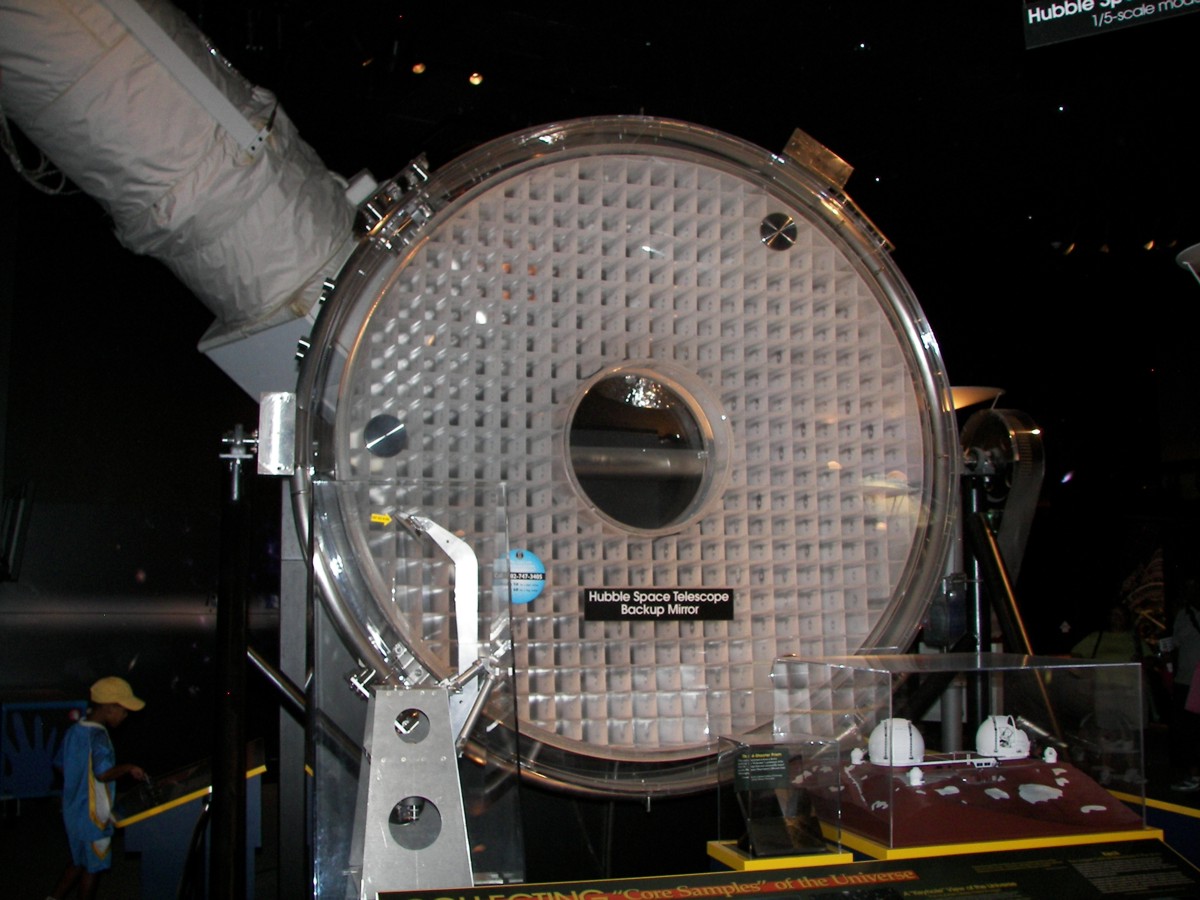
Photos of Hubble Space Telescope Hardware
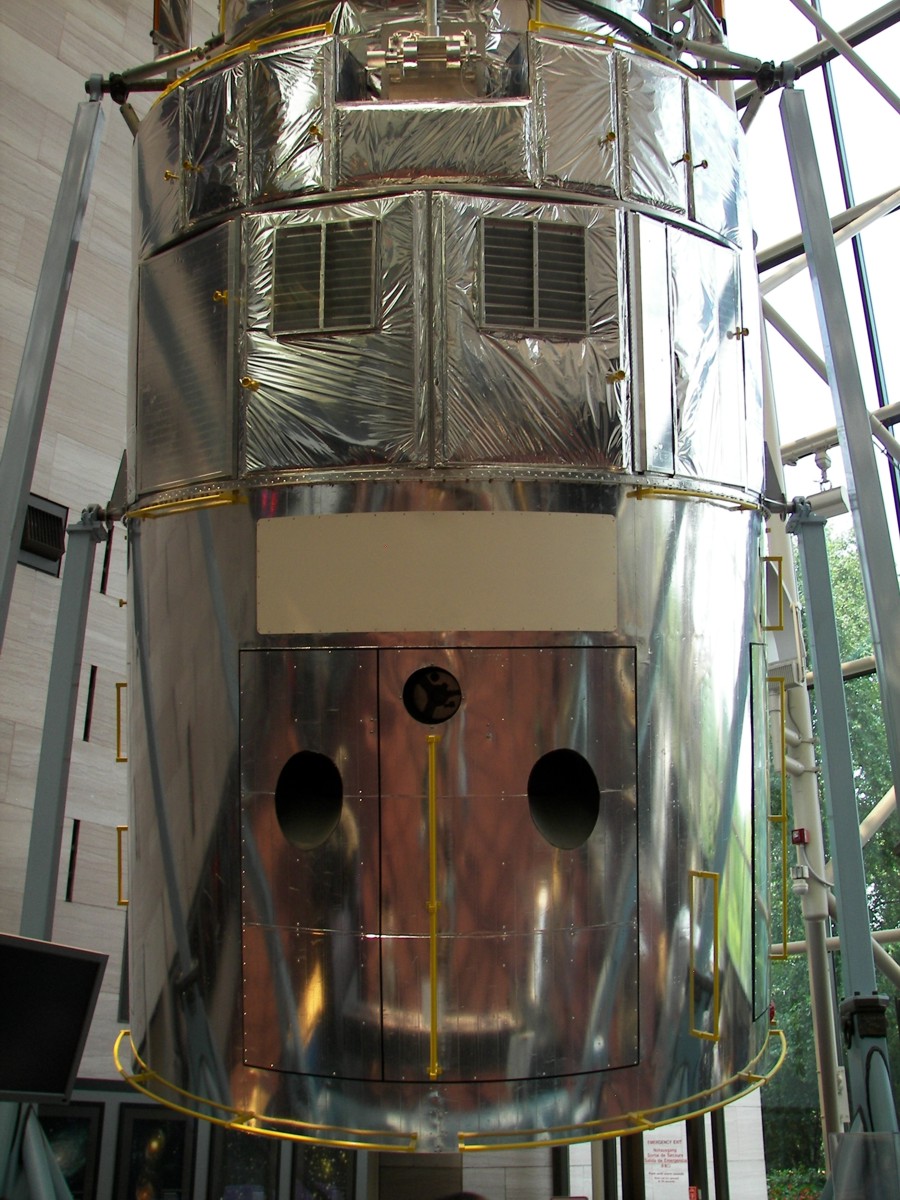
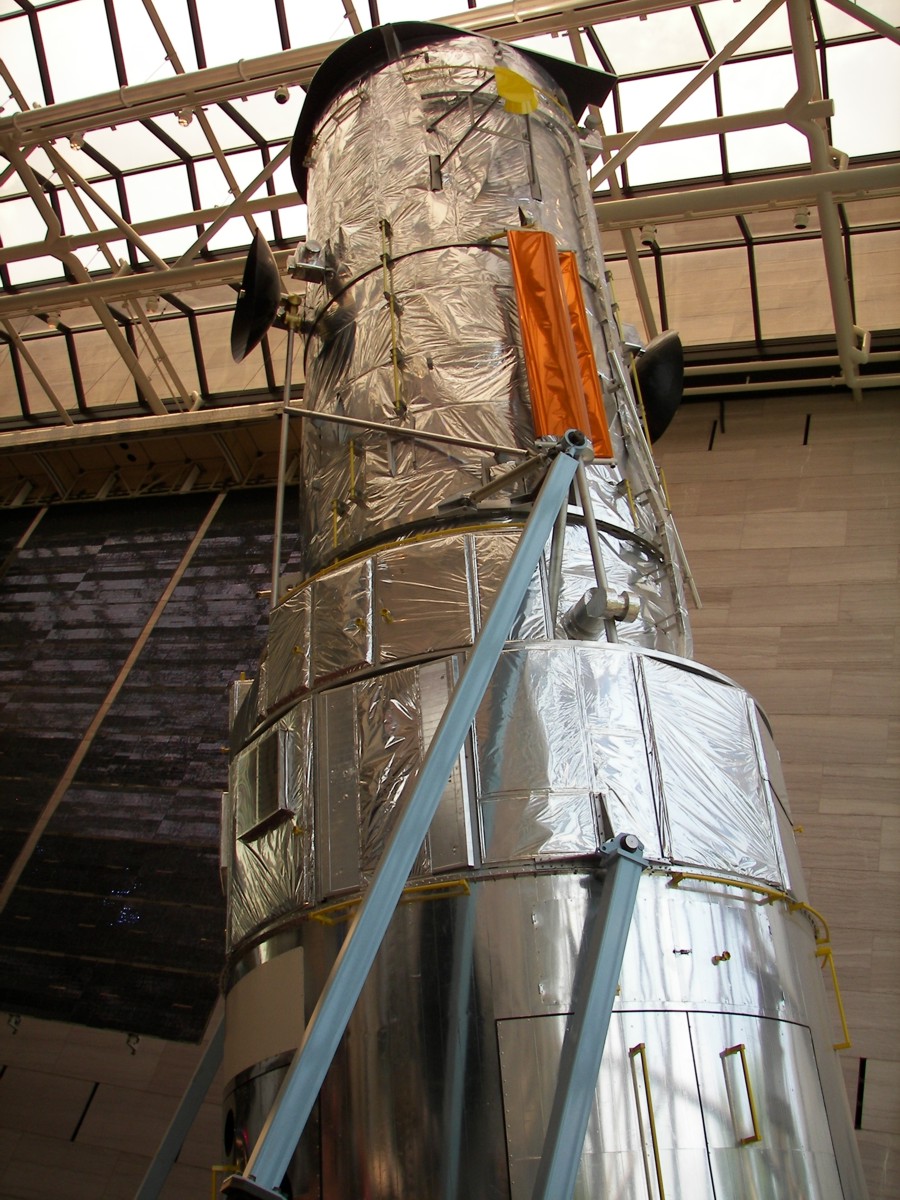
Hubble Space Telescope Structural Dynamic Test Vehicle
Hubble Space Telescope Structural Dynamic Test Vehicle on display at the National Air and Space Museum. (Photos: Richard Kruse, 2009)


Hubble Space Telescope Wide-field Planetary Camera


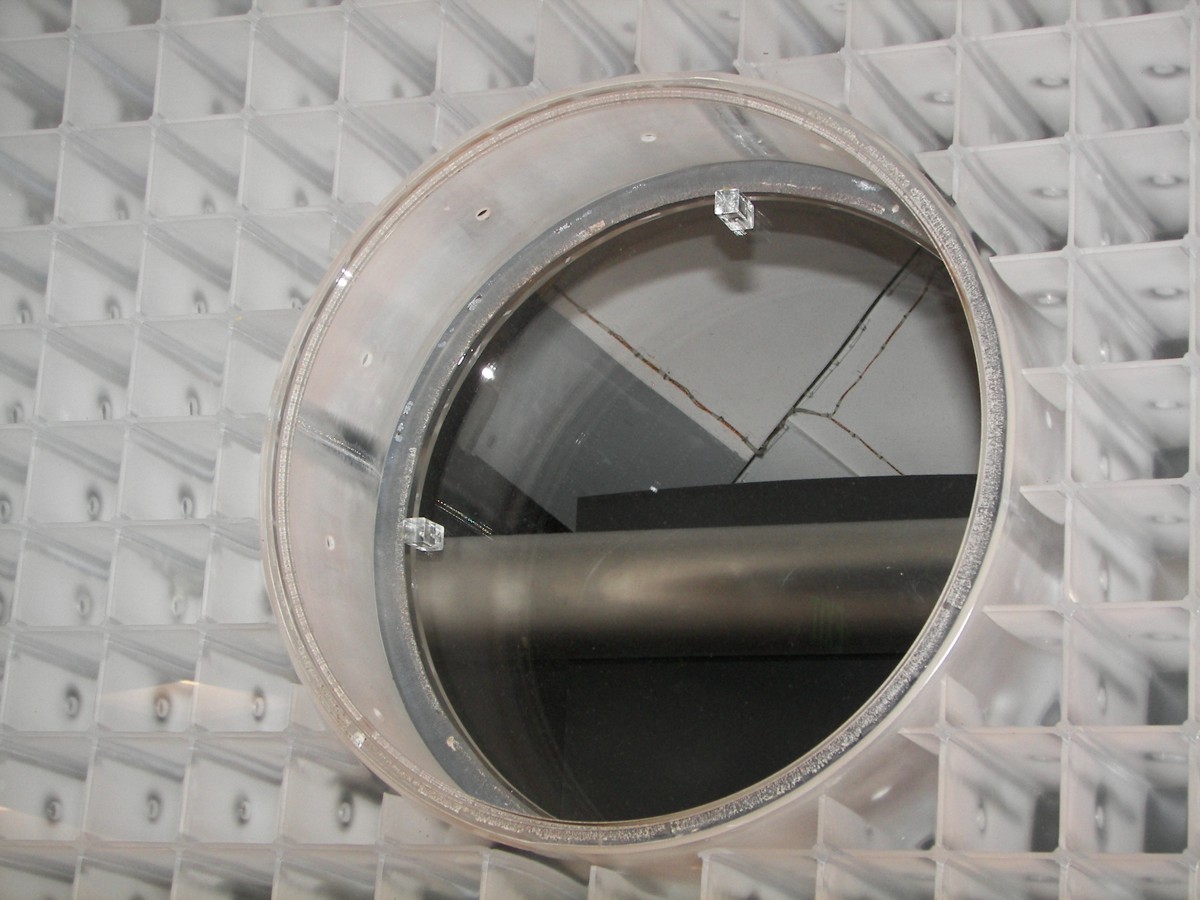
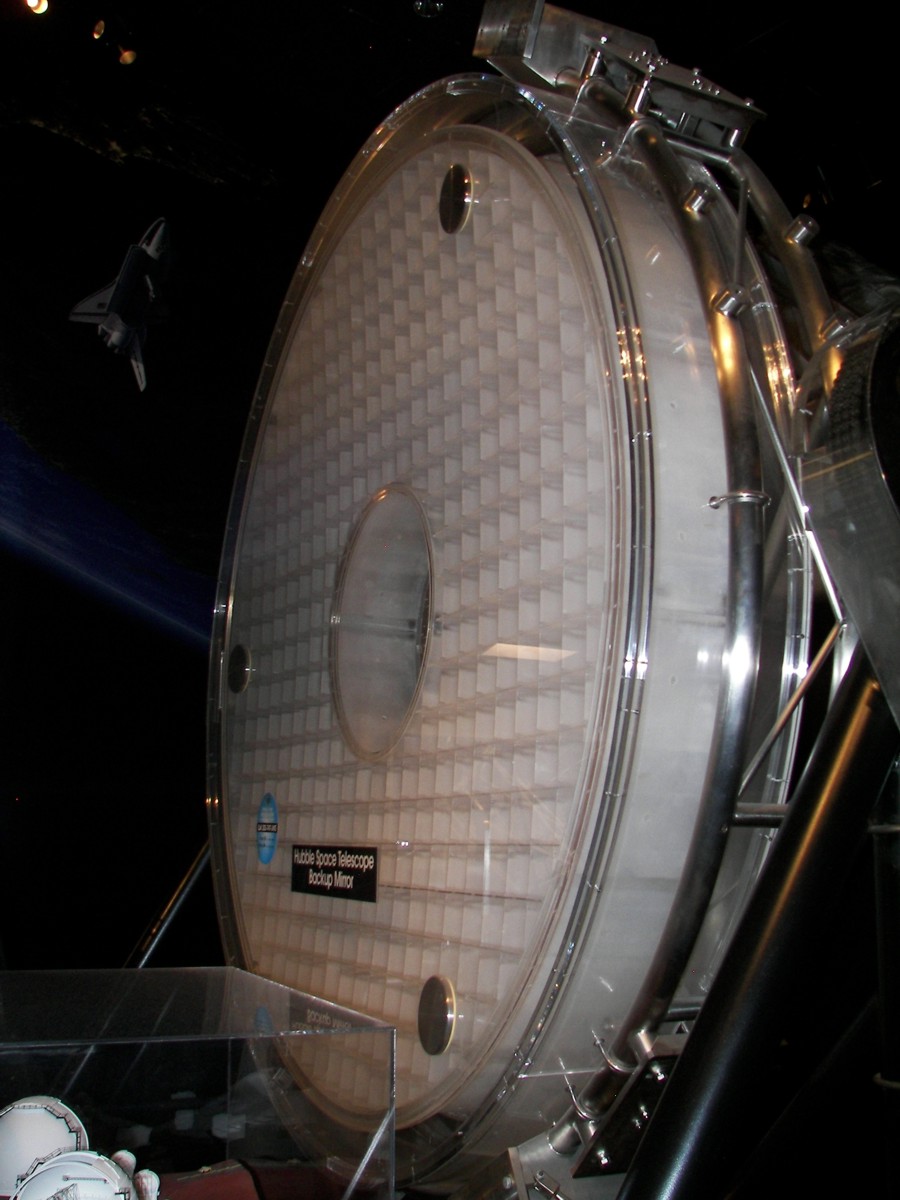
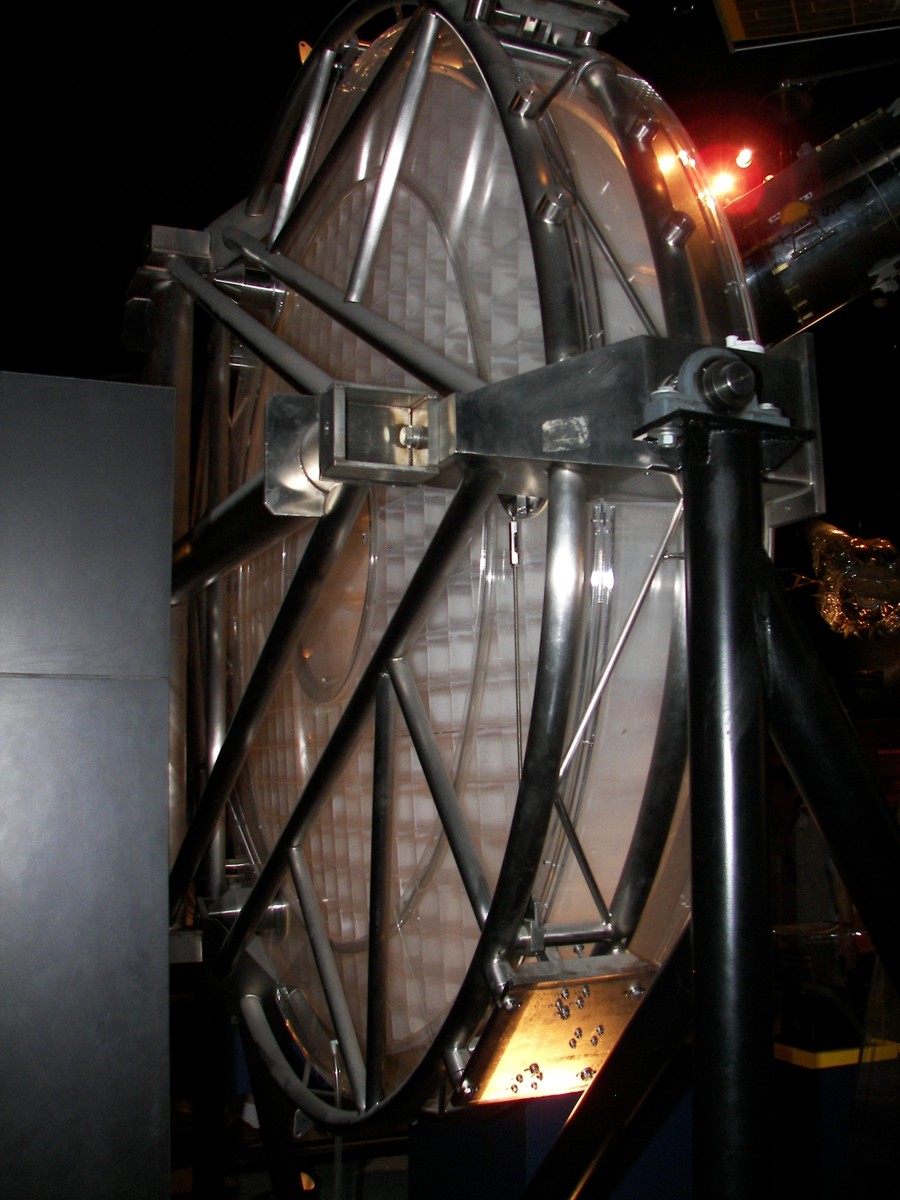
Hubble Space Telescope Backup Mirror


Orbiting Astronomical Observatory (OAO)
A series of four observatories launched by the United States between 1966 and 1972.
OAO-1, launched on 8 April 1966, failed shortly after reaching orbit.
OAO-2, launched on 7 December 1968, operated for over four years. Instruments included photometers and spectrometers.
OAO-B, launched on 30 November 1970, was rendered inoperable when the rockets payload shroud failed to separate.
OAO-3, launched on 21 August 1972, was the most successful of the series. Renamed "Copernicus", OAO-3 operated for nearly a decade.


Copernicus (OAO-3)
Copernicus included an ultraviolet telescope. Equipped with a spectrometer, the telescope measured the spectra of planets, stars, and galaxies. X-ray experiments were also carried on the spacecraft.
Copernicus was launched on an Atlas-Centaur on 21 August 1972. The spacecraft operated until February 1981.
Microwave Observatories

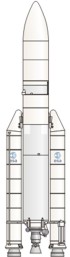
Planck Telescope
Planck will map the microwave background radiation across the entire sky. Planck has two scientific instruments, a The Low-Frequency Instrument (LFI), and a High-Frequency Instrument (HFI). The Planck telescope is 1.5 m in diameter.
Planck was launched on an Ariane 5 rocket from Kourou, French Guiana, on 14 May 2009. The spacecraft orbits the Sun-Earth L2 point.
COBE (Cosmic Background Explorer)
See entry for COBE listed under "Infrared Observatories".
Infrared Observatories
The Infrared portion of the electromagnetic spectrum lies between the microwave and visible-light regions.
The infrared region is divided into several sections, including near, mid, and far.
The near infrared is closest to the visible-light region, while the far infrared is closest to the x-ray region.
Infrared radiation can penetrate interstellar dust clouds more easily than visible light.
Details that might be hidden from visible light telescopes, such as star-forming regions within nebula, can sometimes be observed using infrared telescopes.
The best place to make astronomical infrared observations is from space-based observatories.
Ground based observatories are hampered by the Earth's atmosphere absorbing infrared energy.
All objects, with temperatures above zero degrees Kelvin, give off heat. This heat is in the form of infrared radiation.
When telescopes observe in the infrared, they are really looking at heat given off by objects.
Because equipment within the telescope is generating heat,
it can be difficult or impossible to detect the small amount of heat reaching the instruments from distant astronomical targets.
A solution is to chill the telescope to very low temperatures.
Space infrared observatories often house sensitive detectors in a component known as a cryostat.
A supply of liquid helium is used to cool the cryostat. The supply of helium is used up over time, limiting the life of the observatory.


Spitzer Telescope
The Spitzer space telescope (Formerly known as SIRTF - Space Infrared Telescope Facility) is an infrared observatory. The telescope is equipped with an 85 cm diameter telescope and cryogenically cooled infrared detectors. It's mission is to make infrared observations of galaxies, stars, and planetary disks.
Spitzer has three main science experiments, an infrared spectrograph, an infrared array camera, and a multiband imaging photometer.
The telescope was launched on a Delta-7920H rocket from Cape Canaveral, Florida on 25 August 2003. The spacecraft is in an Earth-trailing, heliocentric orbit, with a period of 363 days.
In order to increase infrared observing sensitivity, Spitzer uses several techniques to lower its temperature. First, because spacecraft in Earth orbit experience significant heat radiating from the planet, Spitzer was launched into an heliocentric orbit far from the Earth. Additionally, Spitzer was launched with a supply of liquid helium to provide cooling. The use of helium to cool equipment, along with the choice of orbit, allows the telescope to operate at a very cold 5.5 Kelvin (-268 Celsius, or -450 Fahrenheit).
The Spitzer Space Telescope is one of NASA'a four "Great Observatories". The Great Observatories, each designed to observe a different part of the electromagnetic spectrum, also includes the Hubble Space Telescope, the Compton Gamma Ray Observatory, and the Chandra X-Ray observatory.

Herschel Telescope
The Herschel telescope was formerly known as FIRST, or Far InfraRed and Submillimetre Telescope. Observations will be made in the infrared spectrum using a 3.5 meter diameter mirror. The cryosat, containing the sensitive instruments, is kept cool using a supply of liquid helium.
Herschel's scientific instruments include the Photoconductor Array Camera and Spectrometer (PACS), the Heterodyne Instrument for the Far Infrared (HIFI), and the Spectral and Photometric Imaging REceiver (SPIRE).
Herschel was launched on an Ariane 5 rocket from Kourou, French Guiana, on 14 May 2009. The spacecraft orbits the Sun-Earth L2 point.


Infrared Space Observatory (ISO)
ISO was an infrared observatory built and operated by the European Space Agency.
Infrared data gathered with the 60 cm telescope was analyzed with four on-board scientific instruments, including a photo-polarimeter (ISOPHOT), a short-wave spectrometer (SWS), a long-wave spectrometer (LWS), and an Infrared Camera (ISOCAM).
The liquid-helium cooling system, filled at launch with 2286 liters of super-fluid helium, was designed for a 20 month lifetime. The telescope actually operated for over 28 months.
ISO was launched on an Ariane 44P rocket (right) on 17 November 1995. The observatory was in a highly elliptical, high-Earth orbit, with a period of around 24 hours.


Infrared Astronomical Satellite (IRAS)
IRAS was a joint mission involving the United States, the Netherlands, and the United Kingdom.
The spacecraft collected data with a 60 cm telescope. A liquid helium system cooled the satellite to around 10 K.
Three instruments were carried, including a focal-plane detector array, a low-resolution spectrometer(LRS), and a chopped photometric channel(CPC).
IRAS operated for ten months, and detected several hundred thousand infrared sources. A major accomplishment of the IRAS mission was the first infrared, all-sky survey.
IRAS was launched from Vandenberg Air Force base, United States, on a Delta-3910 rocket on 25 January 1983. The spacecraft was in a polar orbit with a period of 103 minutes.

Cosmic Background Explorer (COBE) (Explorer 66)
COBE, or Cosmic Background Explorer, was a NASA mission to map infrared and microwave background radiation. This radiation, created by the Big Bang, provided clues about the earliest history of our universe.
COBE had three main experiments, a Differential Microwave Radiometer (DMR), a Diffuse Infrared Background Experiment (DIRBE), and a Far Infrared Absolute Spectrophotometer (FIRAS).
COBE was launched on a Delta-5920 rocket, on 18 November 1989, from Vandenberg Air Force Base. The spacecraft operated in a Sun-synchronous, polar orbit.

Akari (ASTRO-F)
Akari (ASTRO-F) is a Japanese infrared observatory Satellite. The spacecraft's mission is to map the entire sky, in several infrared bands, at higher resolution then was accomplished with the IRAS mission.
Akari instruments include the far-infrared surveyor (FIS), and the near-infrared/mid-infrared camera (IRC). Observations were made with a .685 meter diameter telescope.
The spacecraft was launched on an M-V rocket from the Uchinoura Space Center on 22 February 2006. The spacecraft operates in a 98.2 degree, Sun-synchronous polar orbit , at an altitude of 700 km, with a period of 100 minutes.
X-Ray Observatories
X-rays were discovered, by accident, in 1895 by the German scientist Wilhelm Conrad Rontgen.
X-rays are emitted by a variety of celestial objects, including stars, neutron stars, black holes, pulsars, dark matter, and other sources. Because X-rays are absorbed by Earths atmosphere, orbital satellites offer the best observing opportunities.

Chandra x-ray Telescope
Chandra (formerly known as AXAF, or Advanced X-ray Astrophysics Facility) is a large X-ray observatory. The observatory is named for Dr. Subrahmanyan Chandrasekhar. Dr. Chandrasekhar, often shortened to Chandra, was a Nobel prize winning, Indian-American, astrophysicist.
The observatory has four main scientific instruments, a High Resolution Camera (HRC), an Advanced CCD Imaging Spectrometer (ACIS), the High Energy Transmission Grating Spectrometer (HETGS) and the Low Energy Transmission Grating Spectrometer (LETGS).
Among other objectives, Chandra will study black holes, quasars, dark matter, and the remnants of exploded stars.
The Chandra X-Ray observatory is one of NASA'a four "Great Observatories". The Great Observatories, each designed to observe a different part of the electromagnetic spectrum, also includes the Hubble Space Telescope, the Compton Gamma Ray Observatory, and the Spitzer Space Telescope.
Chandra was launched by the Space Shuttle Columbia (STS-93) on 23 July 1999. Deployed into low Earth orbit by the space shuttle crew, the telescope used an Inertial Upper Stage (IUS) to significantly raise its orbit. The spacecraft operates in a highly elliptical Earth orbit with a period of 64 hours and an inclination of 28.5 degrees.

XMM-Newton Telescope
XXM-Newton (X-ray Multi-Mirror) is an x-ray observatory built by the European Space Agency. Instruments include photon imaging cameras, reflection grating spectrometers, and an optical monitor. The observatory continues to operate and the mission has been extended until December 31, 2012.
XXM-Newton was launched on an Ariane 5 on 10 December 1999. The spacecraft is in an elliptical, 48 hour orbit.

Ginga (Astro-C)
Ginga (Astro-C) was a Japanese x-ray astronomy satellite.
Ginga included three instruments, the Scientific Instruments Large Area Counter (LAC), the All-Sky Monitor (ASM), and a Gamma-ray Burst Detector (GBD).
The spacecraft was launched on an M-3S11 rocket from the Kagoshima Space Center on 5 February 1987. The spacecraft operated in a circular, 31 degree, 96 minute orbit.
Operations ended on 23 April 2004. The spacecraft reentered on 12 September 2005.

Asca (Astro-D)
Asca (Astro-D) was a Japanese x-ray observatory Satellite.
Asca included three instruments, an X-ray Telescope (XRT), an X-ray CCD camera, and a Gas-Imaging Spectrometer (GIS).
The spacecraft was launched on an M-3S11 rocket from the Kagoshima Space Center on 20 February 1993. The spacecraft operated in a circular, 31 degree, 96 minute orbit.
Operations ended on 2 March 2001.

Suzaku (Astro-E2)
Suzaku (Astro-E2) was a Japanese x-ray observatory Satellite.
Suzaku instruments include X-ray telescopes (XRT), a hard X-ray Detector (HXD), a high-resolution X-ray spectrometer (XRS), and an X-ray Imaging Spectrometer (XIS).
The spacecraft was launched on an M-V rocket from the Uchinoura Space Center on 10 July 2005. The spacecraft operated in a circular, 31 degree, 96 minute orbit.

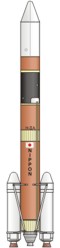
Hitomi (ASTRO-H)
Hitomi (ASTRO-H) was an x-ray astronomy mission developed and launched by the Japanese Aerospace Exploration Agency (JAXA).
Other organizations contributing to the mission included NASA, ESA and the Canadian Space Agency (CSA).
Hitomi was launched on an H-IIA rocket from Japan's Tanegashima Space Center on 17 Feb 2016.
During the first few weeks in orbit, the spacecraft experienced a number of significant anomalies.
Problems with the attitude control system resulted in a fast spin rate that likely caused some spacecraft components,
including the solar arrays, to break away.
In April 2016, JAXA announced they had given up efforts to salvage the severely damaged spacecraft.
Gamma-Ray Observatories
Gamma-rays, the most energetic form of electromagnetic radiation, have the smallest wavelengths of any wave in the electromagnetic spectrum. Because gamma-rays can not be reflected with mirrors, special sensors, using a process called Compton scattering, are required to detect them.
Celestial gamma-rays are produced from a number of sources, including supernova explosions, black holes, neutron stars, and pulsars. Because they are absorbed by Earth's atmosphere, celestial gamma-ray sources are best studied by observatories in orbit.
Brief bursts of gamma-ray photons, lasting from a few minutes to less then a second, are known as gamma-ray bursts. Of prime interest to astronomers, these bursts can outshine all other gamma-ray sources in the observable universe! Gamma-ray bursts, originating in other galaxies, are detected about once per day.

Compton Gamma Ray Observatory (GRO)
The Compton Gamma-Ray Observatory has four main instruments: the Burst and Transient Source Experiment (BATSE), the Oriented Scintillation Spectrometer Experiment (OSSE), the Imaging Compton Telescope (COMPEL), and the Energetic Gamma-Ray Experiment Telescope (EGRET).
The observatory was named to honor Dr. Arthur Holly Compton. In 1927, Dr. Compton won a Nobel prize in physics for his work in gamma ray astronomy.
The observatory was launch by the Space Shuttle on 5 April 1991. The spacecraft operated in a 28.5 degree, low Earth orbit, with a period of 90 minutes.
The spacecraft re-entered Earth's atmosphere on 4 June 2000.


INTEGRAL Gamma-Ray Observatory
INTEGRAL (INTErnational Gamma-Ray Astrophysics Laboratory) is an orbital, gamma-ray observatory. The program is led by the European Space Agency, with assistance from Russia and the United States. Instruments include a gamma ray spectrometer, a gamma ray imager, an X-ray monitor, and an optical monitoring camera.
The telescope was launched on a Russian Proton-K Blok-DM rocket on 17 October 2002. The spacecraft is in an elliptical, 66 hour orbit.

.jpg)
Fermi Gamma-ray Space Telescope (GLAST)
Fermi Gamma-ray Space Telescope, formally known as GLAST (Gamma-ray Large Area Space Telescope), is an orbital, gamma-ray observatory.
Fermi carries two main scientific instruments, the Large Area Telescope (LAT), and the GLAST Burst Monitor (GBM).
The telescope was launched on a Delta II 7920H-10 rocket on 11 June 2008.


Granat
Granat, Originally called Astron 2, was a gamma-ray and X-ray orbital astronomical observatory.
Granat had seven instruments, including the French Sigma coded-mask gamma radiation telescope, an X-ray telescope, and a spectroscope.
The telescope was launched on a Russian Proton-K Blok-D rocket on 12 January 1989. The spacecraft operated in an elliptical, 98 hour, Earth orbit.
Transmissions from the spacecraft ended on 27 November 1998.
Planet Finders


TESS
TESS (Transiting Exoplanet Survey Satellite) is an American mission
that will conduct an all-sky survey looking for exoplanet transits.
The mission is expected to examine more than 200,000 stars for possible planets.
TESS was launched on 28 April 2018 on a Falcon-9 rocket, from Cape Canaveral Air Force Station, USA.
For more information, visit the TESS website at NASA Goddard Space Fight Center.


Kepler Telescope
The Kepler mission is a space telescope searching for Earth-sized planets orbiting distant stars.
Kepler was launched on 6 March 2009 on a Delta-7925-10L rocket from Cape Canaveral, Florida.
The spacecraft is in an Earth-trailing, heliocentric orbit.
In recent years, scientists have discovered several hundred planets orbiting other stars.
However, most of these planets are very large, gas giant, type planets. Others are planets far too close to stars to provide an Earth-like environment for life.
Earth-like planets, because of their small size, are very difficult to locate from ground based telescopes.
Earth's atmosphere creates too much distortion to see such small, distant objects.
By focusing on a single field of view for three and a half years, Kepler will search for short term dimming of stars.
Twice per hour, Kepler will observe over 100,000 stars looking for dimming that might indicate the passage of a planet orbiting the star. (Think of a Solar eclipse. As the Moon passes in front of the Sun, the sunlight reaching Earth dims for a period of time.)
The main scientific instrument, indeed the only instrument, is a Schmidt type telescope with a .95 meter aperture and a 1.4 meter primary mirror.
The focal plane array includes an amazing 95 megapixels.


COROT
COROT (COnvection ROtation and planetary Transits) is a French Space Agency (CNES) led mission. One objective of the mission is to search for exoplanets. The spacecraft will monitor stars, looking for slight drops in brightness, indicating the transit of an orbiting planet. The mission is expected to examine 12000 stars for possible planets.
Another objective of the COROT mission is Astro-seismology. The spacecraft will observe star brightness variations caused by ripples on the stars surface. The result of star-quakes, these ripples can reveal clues about a stars composition and mass.
The spacecraft uses a 27 cm aperture telescope for observing. Two cameras, one for astro-seismology and another for the exoplanet search, are included.
COROT was launched on 27 December 2006 on a Soyuz-Fregat rocket, from Baikonur, Kazakhstan. The spacecraft operates in a circular, polar orbit.
Solar Observatories
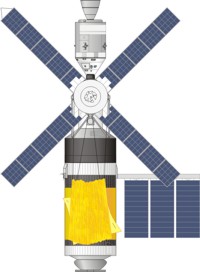

Skylab (Apollo Telescope Mount)
The Skylab space station was launched on a Saturn 5 Rocket on May 14, 1973.
A large component of the station, known as the Apollo Telescope Mount, housed an array of solar telescopes.
Using a control station inside the station, astronauts accumulated hundreds of hours of solar observing time.
Skylab was ultimately visited by three crews. Each crew, consisting of a commander, a pilot, and a science pilot, was transported to the station using Apollo spacecraft.
Each successive crew stayed longer then the previous mission. Durations of 28 days, 59 days, and 84 days were achieved.
Despite nearly catastrophic problems early on, Skylab proved highly successful and completed all of its major objectives.
Proving that humans could do productive work for prolonged periods of time while in orbit.
Apollo Telescope Mount (ATM)
Designed to support solar observations, the Apollo Telescope Mount housed a number of solar telescopes.
The ATM consisted of an octagonal structure 3.4m in diameter, and 4.4m long. Inside was a cylinder, 2.1m in diameter and 3m long.
A cruciform structure, dividing the cylinder into four quadrants, provided mounting points for solar experiments housed within the cylinder.
The inner structure was gimbaled, allowing very fine pointing control for the sensitive instruments.
When not in use, each instrument was protected by a moveable aperture door.
Solar experiments mounted in the ATM included the following:
S-056 X-Ray telescope
S-054 X-Ray telescope
S-082A Extreme Ultraviolet Spectroheliograph
S-082B Ultraviolet Spectrograph
S-020 X-ray and extreme ultraviolet camera
S-055 Ultraviolet Spectroheliometer
S-052 White Light Coronagraph
H-alpha no. 1 Hydrogen-Alpha Telescope
H-alpha no. 2 Hydrogen-Alpha Telescope
Apollo Telescope Mount Mockup
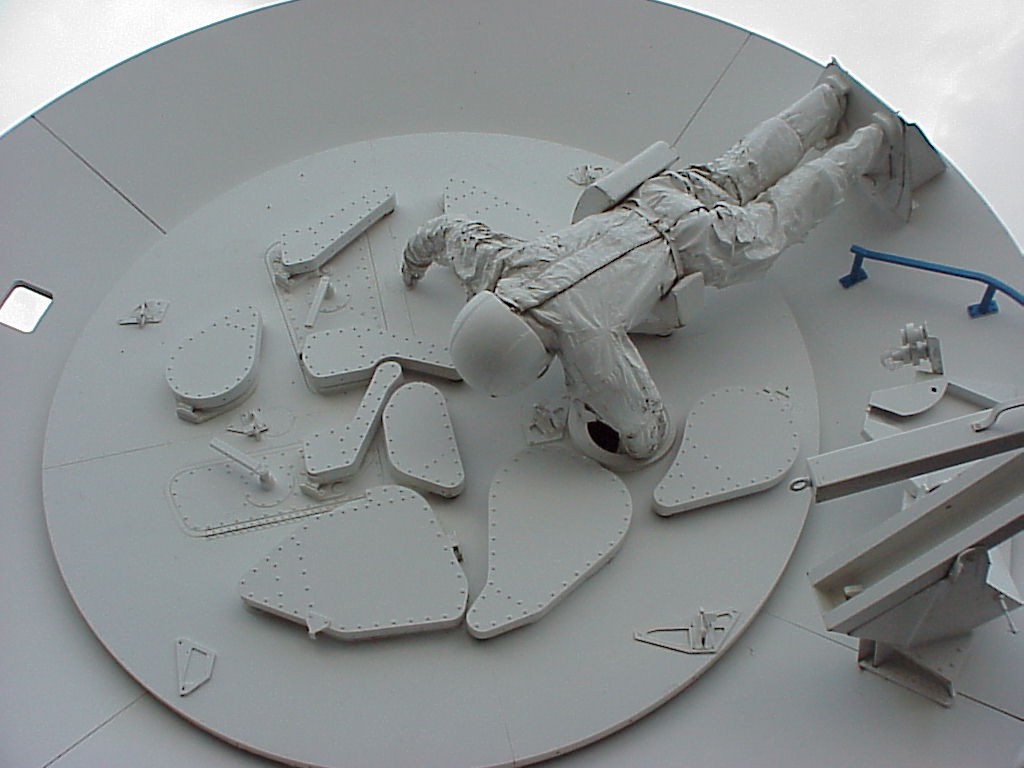
Skylab Apollo Telescope Mount mockup on display at the United States Space and Rocket Center. This hardware was used for training in the Neutral Buoyancy Laboratory. (Photos: Kevin Reynolds, 2001)


SOHO
SOHO (SOlar and Heliospheric Observatory) is a joint mission of NASA and the European Space Agency. The spacecraft was built in Europe. Mission control is at Goddard Space Flight Center in Maryland.
The spacecraft has twelve instruments for conducting solar observations.
SOHO was launched on an Atlas II-AS rocket on 2 December 1995. SOHO operates in a halo orbit at the Earth-Sun L1 Lagrangian point. This orbit allows an uninterrupted view of the Sun.
SOHO Instruments
Coronal Diagnostic Spectrometer (CDS)
Charge, Element, and Isotope Analysis System (CELIAS)
Comprehensive Suprathermal and Energetic Particle Analyzer (COSTEP)
Extreme ultraviolet Imaging Telescope (EIT)
Energetic and Relativistic Nuclei and Electron experiment (ERNE)
Global Oscillations at Low Frequencies (GOLF)
Large Angle and Spectrometric Coronagraph (LASCO)
Michelson Doppler Imager (MDI)
Solar Ultraviolet Measurements of Emitted Radiation (SUMER)
Solar Wind Anisotropies (SWAN)
Ultraviolet Coronagraph Spectrometer (UVCS)
Variability of Solar Irradiance and Gravity Oscillations (VIRGO)

Yohkoh (SOLAR-A)
Yohkoh (SOLAR-A) is a Japanese mission to study solar flares.
The Yohkoh spacecraft has four main instruments, a soft X-ray telescope (SXT), a hard X-ray telescope (HXT), a Bragg crystal spectrometer (BCS), and a wide-band spectrometer (WBS).
Yohkoh was launched on a Japanese M-3-SII rocket, at the Kagoshima Space Center, on 30 August 1991. The spacecraft operates in a circular orbit at 31 degrees, with an altitude of approximately 550 km, and a period of 98 minutes.
Operations ended on 23 April 2004, and the spacecraft reentered on 12 September 2005.

Hinode (SOLAR-B)
Hinode, also known as Solar-B, is a Japanese mission to observe the Sun with scientific instruments.
The Hinode spacecraft has three main instruments, a Solar Optical Telescope (SOT), an X-ray telescope (XRT), and an Extreme-ultraviolet Imaging Spectrometer (EIS).
Launched on a Japanese M-V rocket, at the Uchinoura Space Center (USC), on 23 September 2006. Hinode operates in a Sun-synchronous polar orbit at 98 degrees with an altitude of approximately 680 km.


Solar Dynamics Observatory (SDO)
The Solar Dynamics Observatory (SDO) is designed to study variations in Solar activity.
SDO includes three main instruments, the Atmospheric Imaging Assembly (AIA), the Extreme Ultraviolet Variability Experiment (EVE), and the Helioseismic and Magnetic Imager (HMI).
The Solar Dynamics Observatory was launched on 11 February 2010 on an Atlas V-401 rocket. The rocket launched from SLC-41 at Cape Canaveral Air Force Station.
 Images by Richard Kruse are licensed under a Creative Commons Attribution-Noncommercial 3.0 United States License.