Launched in 1975, the Viking 1 and Viking 2 probes landed successfully on Mars in 1976. The Viking landers provided vast amounts of data about the Martian surface.
| Mission | Launch Date | Launch Vehicle | Mission | Results |
| Viking 1 | 20AUG1975 | Titan IIIE/ Centaur | Mars Orbiter and Lander | Obit Insertion - 19JUN1976 Landing - 20JUL1976 Last Contact - 13NOV1982 |
| Viking 2 | 9SEP1975 | Titan IIIE/ Centaur | Mars Orbiter and Lander | Obit Insertion - 7AUG1976 Landing - 3SEP1976 Last Contact - 11APR1980 |
Viking mars lander on display at the National Air and Space Museum. (Photos: Richard Kruse, 2008)
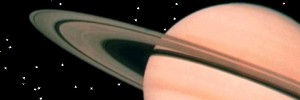
Voyager 1 and 2 were designed to investigate Jupiter and Saturn, their moons, and interplanetary space. Both spacecraft successfully conducted flybys of Jupiter and Saturn. Voyager 2 also encountered Uranus and Neptune during the 1980's.
| Mission | Launch Date | Launch Vehicle | Mission | Results |
| Voyager 1 | 5SEP1977 | Titan III E-Centaur | Outer Planets | Jupiter Flyby - 5MAR1979 Saturn Flyby - 12NOV1980 |
| Voyager 2 | 20AUG1977 | Titan III E-Centaur | Outer Planets | Jupiter Flyby - 9JUL1979 Saturn Flyby - 25AUG1981 Uranus Flyby - 24JAN1986 Neptune Flyby - 25AUG1989 |
Voyager Probe on display at the National Air and Space Museum. (Photos: Richard Kruse, 2009)
The spacecraft bus housed electronics and other systems.
The science boom was around 2.5 meters in length. A steerable scan platform was mounted on the boom. The scan platform allowed instruments to be pointed at specific targets.
Voyager probes were powered by three radioisotope thermoelectric generators. Each RTG initially provided around 470 watts of 30 volt DC power. Power output has reduced as the plutonium decays over time.
The Mariner program consisted of ten exploration probes launched between 1962 and 1973. Mariner spacecraft explored Venus, Mars, and Mercury.
| Mission | Launch Date | Launch Vehicle | Mission | Results |
| Mariner 1 | 22JUL1962 | Atlas-Agena B | Venus flyby | Launch Failure |
| Mariner 2 | 27AUG1962 | Atlas-Agena B | Venus flyby | Success |
| Mariner 3 | 5NOV1964 | Atlas-Agena D | Mars flyby | Failure - Communication Lost |
| Mariner 4 | 28NOV1964 | Atlas-Agena D | Mars flyby | Success |
| Mariner 5 | 14JUN1967 | Atlas-Agena D | Venus flyby | Success |
| Mariner 6 | 24FEB1969 | Atlas-Centaur | Mars flyby | Success |
| Mariner 7 | 27MAR1969 | Atlas-Centaur | Mars flyby | Success |
| Mariner 8 | 5MAY1971 | Atlas-Centaur | Mars Orbiter | Launch Failure |
| Mariner 9 | 30MAY1971 | Atlas-Centaur | Mars Orbiter | Success |
| Mariner 10 | 3NOV1973 | Atlas-Centaur | Flybys of Venus and Mercury | Success |
Launched on August 27, 1962, Mariner 2 was the first spacecraft to visit Venus. These photos are of a replica, constructed from test components, on display at the National Air and Space Museum. (Photos: Richard Kruse, 2009)
Launched on November 3, 1973, Mariner 10 was the first spacecraft to visit two planets. Mariner 10 used the gravitational pull of Venus to redirect its trajectory toward Mercury. A total of one Venus flyby and three Mercury flybys were conducted. These photos are of a flight spare, on display at the Udvar-Hazy Center. (Photos: Richard Kruse, 2009)
Launched on January 19, 2006, the New Horizons mission is currently in route to a flyby of Pluto and its moon, Charon. The mission launched on an Atlas-V (551) rocket from launch complex 41 at Cape Canaveral. These photographs are of a full-size model on display at the Udvar Hazy Center. (Photos: Richard Kruse, 2009)
The Russian Mars 96 mission failed due to a booster failure in 1996. In addition to an orbiter, the Mars-96 mission was to deploy a pair of surface landers. These photographs are of a surface lander engineering model on display at the Udvar Hazy Center. (Photos: Richard Kruse, 2009)
Two Vega probes were launched by the Soviet Union in 1985. Each probe deployed a lander and balloon at Venus, then performed a flyby of Comet Halley.
Vega Spacecraft on display at the Udvar Hazy Center. (Photos: Richard Kruse, 2008)
The Huygens probe was the first spacecraft to land on Titan. These photographs are of a model at the London Science Museum. (Photos: Richard and Sharron Kruse, 2009)
Launched with the Mars Express orbiter in 2003, Beagle 2 was designed to land on Mars. It's mission was to search for signs of present or past life on the surface. Unfortunately, no confirmation of landing was received. All attempts to contact the Lander failed. These photographs are of a model at the London Science Museum. (Photos: Richard and Sharron Kruse, 2009)
Launched by the Soviet Union on October 4, 1957, Sputnik 1 became the first spacecraft to orbit the Earth. These photographs are of a replica at the National Air and Space Museum. (Photos: Richard Kruse, 2009)
Images by Richard Kruse are licensed under a Creative Commons Attribution-Noncommercial 3.0 United States License.